


Polarized sunglasses can be genuinely helpful for baseball — cutting glare off the field, sharpening depth perception, and reducing eye strain during long sunny games. But they’re not automatically the right choice for every player or every lighting condition.
Here’s where they shine, where they fall short, and how to decide whether they belong in your kit.
Understanding Polarized Sunglasses
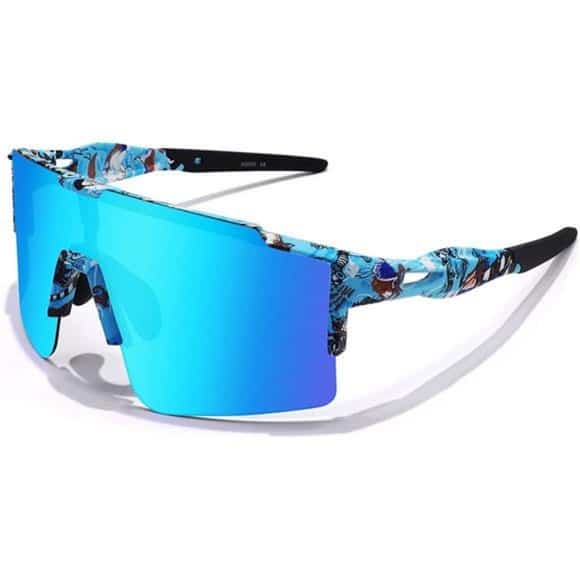
Before delving into their specific applications in baseball, let’s get a basic understanding of what polarized sunglasses are and how they work.
What Are Polarized Sunglasses?
Polarized sunglasses are designed with a special filter that blocks intense reflected light, reducing glare. This glare usually occurs when the sun’s rays bounce off flat surfaces, such as a baseball field or water. By neutralizing it, polarized sunglasses improve comfort and visibility.
How Do Polarized Sunglasses Work?
The polarizing filter in these sunglasses works on the principle of light polarization. This involves transforming unpolarized light into polarized light, which travels in a single plane, thereby reducing glare. Polarized sunglasses allow vertically-oriented light into the eyes while blocking horizontal wavelengths, which are typically associated with glare.
The Impact of Polarized Sunglasses on Baseball Performance
To understand the value of polarized sunglasses in baseball, we need to consider the demands of the game and how visual clarity influences performance.
Improved Visibility
One of the most significant advantages of polarized sunglasses is enhanced visibility. They eliminate the harsh glares and reflections that often occur during daytime games, ensuring that players can focus on the ball throughout its flight. This is especially vital for fielders who need to track and catch fly balls. Without polarized sunglasses, the sun’s glare can interfere with their ability to judge the ball’s trajectory and speed accurately.
Eye Comfort and Health
Aside from aiding performance, polarized sunglasses also provide superior comfort. They reduce eyestrain, a common issue for players during bright, sunny games. By blocking intense light, they protect the eyes and help prevent potential long-term damage, such as cataracts or macular degeneration, both associated with excessive UV exposure.
Enhanced Depth Perception
Polarized lenses can enhance a player’s depth perception, which is crucial in baseball. When players are batting, they need to quickly and accurately gauge the pitch’s speed and location. Similarly, when fielding, players need to determine the ball’s distance and speed. By reducing glare and enhancing visual clarity, polarized sunglasses can significantly improve a player’s depth perception.
Polarized Sunglasses: A Necessary Tool in Baseball?
With the advantages highlighted, the question arises: are polarized sunglasses an essential tool in baseball?
Player Preference and Comfort
It’s important to note that while polarized sunglasses have their benefits, they might not be suitable for everyone. Some players may find them uncomfortable or distracting. The effectiveness of these sunglasses can also vary depending on the time of day and the lighting conditions.
Varying Light Conditions
Baseball games often last several hours, during which the sun’s position and the light conditions can change dramatically. Under less intense light, polarized sunglasses may provide little to no benefit, and could even potentially darken the player’s vision too much.
Conclusion: Are Polarized Sunglasses Good for Baseball?
For bright daytime games, polarized lenses offer real advantages: less glare, better tracking of fly balls, improved depth perception, and UV protection. But they can darken vision too much in overcast or evening conditions, and some players simply find them distracting.
If you play at varying times of day, consider interchangeable-lens sport frames — a polarized lens for midday sun and a lighter contrast lens for cloudy or evening games. And make sure any pair meets impact-resistance needs; a foul ball doesn’t care about your tint.
Content reviewed and updated in October 2026.

Recent Comments